


 Online Editor
‘Street Fighter’: Acton comedy suffers criticism
By Vienna Miller
Staff Writer
Video game live-action adaptations make a return with the “Street Fighter” film, offering both nostalgia and criticism.
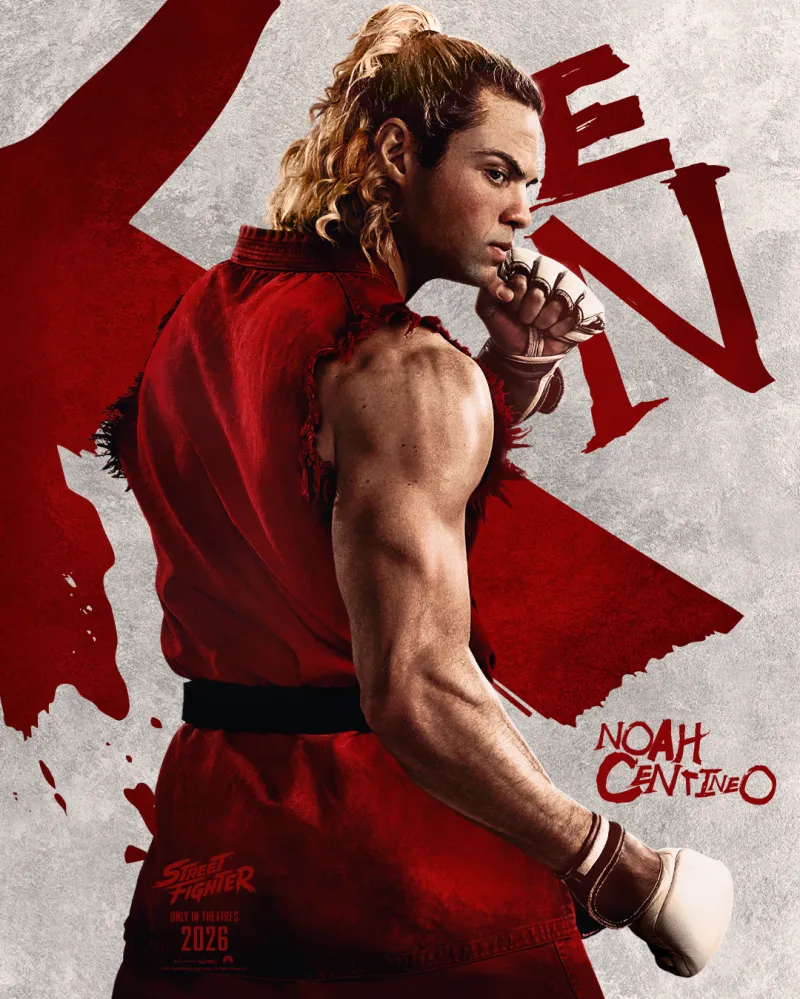
“Street Fighter” is about Ken Masters and Ryu being reunited after the loss of their master for a tournament held by M. Bison.
“Street Fighter” character Ken Masters is played by Noah Centineo, and Ryu is played by Andrew Koji. While tournament host M. Bison is played by David Dastmalchian.
The tournament features many beloved characters from the “Street Fighter” franchise, with characters such as Chun Li, played by Callina Liang, Guile, played by WWE star Cody Rhodes, Balrog, played by 50 Cent and many more.
Directed by Kitao Sakurai, who produced shows such as “Twisted Metal” and “The Eric Andre show.”
“Street Fighter” relies heavily on its nostalgia factor much like other live-action film adaptations.
Sakurai took a unique approach that is unlike any other film, instead of using younger actors for flashbacks; he instead opted for hand-drawn animation sequences.
Those scenes offer intense fighting and groundwork for the core of the story that the live-action portions seem to do less of.
Sakurai’s technique, much like his past work, is to emphasize humor.
While the film wouldn’t suffer without it, it may suffer from too much of it.
There are many jokes, but some are dragged out. It unnecessarily prolonged scenes and takes away from the risks the protagonists face.
However, this film isn’t meant to be taken seriously, but when it does, it is hard for audiences to shift gears.
In particular, Bison did not feel much like his character from the games at all.
Sakurai spins his nature from being psychotically hungry for power to being downright creepy and suggestive.
It is likely an attempt to be funny, but it strips Bison from being a serious villain to nothing more than a weakling.
The film makes it clear that Bison hasn’t yet reached his full potential, and offers another look into his character; it’s an interesting take that diminishes the stakes of fighting him.
Aside from Bison, all actors did a spectacular job as their characters, with the most notable being Orville Peck as Vega and Vidyut Jammwal as Dhalsim.
The film does its job in hyping up long-time “Street Fighter” fans for accurate characters and fight scenes, but it suffers from poor structure and direction.
Some fight scenes are merely suggestions, occurring off-screen, which strips away a lot of potential fight scenes that could elevate both the story and the movie.
The tournament plays in the background; even though it is the driving force for these characters competing together; audiences don’t get to see the action they anticipate.
Many complaints from both audiences and critics are that the film’s structure is messy, hopping from one scene to another to fill gaps, an issue “Mortal Kombat 2” has and likely future video game live-actions will have.
It is a downside that fans will have to endure more explanation than needed, as these movies will have to not only appease die-hards, but also mainstream audiences.
Both “Street Fighter” and “Mortal Kombat 2” have an enormous casts, and the pressure is on to convince fans who are invested in their characters.
“Street Fighter” earns a 42% rating from critics and a 79% rating from audiences on Rotten Tomatoes.
There is a distinct disconnect between fans and critics, with fans being more receptive to the film than critics.
The criticism is mostly about the time jumps and odd cuts between scenes or wishing for the film to be animated completely.
“Street Fighter” is mindless fun, not meant to be taken seriously, but it could lean a bit closer to its source material, add more action and spare some jokes.
0 Comment